🇩🇪 ✓ eSIMMY covers Germany

Germany on Your Own Terms: Trains, Beer Gardens, and Staying Connected

Travel Germany with an eSIM - fast 4G/5G in cities, rural gaps explained, and tips for trains, cash, and local navigation.

4G/5G in major citiesRight-hand trafficUTC+2 (CEST)Euro (EUR)
Get your Germany eSIM
Germany

Germany Is Bigger Than Berlin

Most first-timers land in Frankfurt or Munich, spend a long weekend, and leave thinking they've seen Germany. They haven't. The country stretches from the North Sea coast down to the Bavarian Alps, and the differences between regions are genuinely striking - not just in landscape, but in dialect, food, pace, and attitude.

Berlin is still the headline act. Prenzlauer Berg for coffee and slow mornings. Kreuzberg for food markets and late nights. The U-Bahn runs reliably, and the BVG app handles tickets, maps, and live departures in one place. But Munich is where old Germany feels most intact - the Viktualienmarkt has been running since 1807, and a Mass of Helles at a biergarten in the English Garden on a July afternoon is one of the better simple pleasures in Europe.

Further west, the Rhine Valley earns its postcard reputation. Bacharach and Rüdesheim are small towns with medieval towers and steep vineyard slopes above the river. Take the slow regional train rather than the ICE and you'll actually see it. Cologne, Hamburg, and Dresden each carry a distinct personality. Germany rewards the traveler who picks two or three places and goes deeper rather than rushing the whole map.

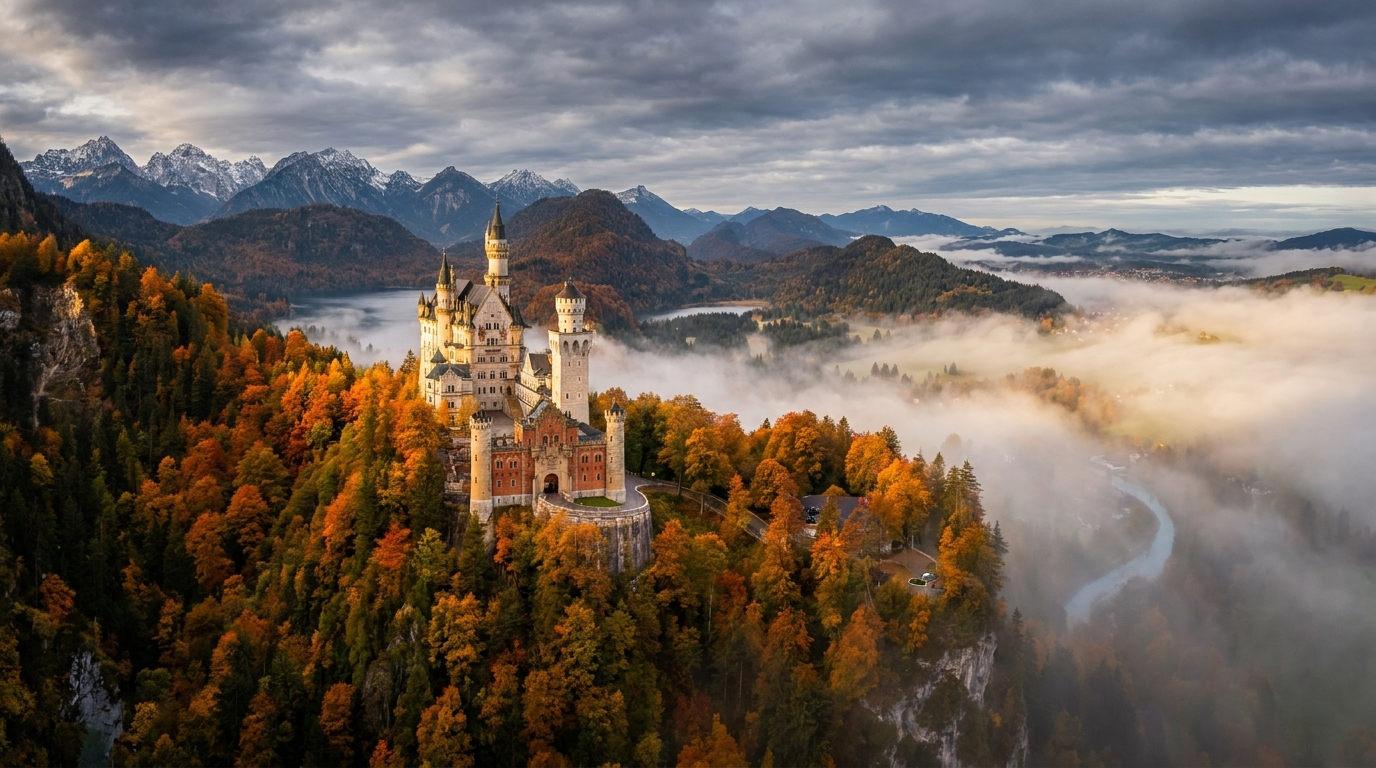
July is one of the better months to visit. Long days, outdoor seating everywhere, and the country's festival calendar is running at full speed. Expect crowds at the obvious spots - Neuschwanstein gets genuinely packed by midmorning. Get there before 9am or plan around it.
Connectivity in Germany: What to Actually Expect

Germany's mobile network coverage is good in cities and along major rail corridors - and patchier than you'd expect once you're in rural areas. Telekom (T-Mobile) has the widest footprint. Vodafone and Telefónica (O2) cover most urban and suburban zones. 5G is active in Berlin, Munich, Hamburg, Frankfurt, and Cologne, though you'll spend most of your time on solid 4G LTE regardless.

The honest caveat: Germany has real dead zones in forested areas and some valley routes in Bavaria and the Black Forest. If you're hiking the Bavarian Alps or driving through the Schwarzwald, don't count on constant signal. Download your maps offline through Google Maps or Maps.me before you leave your accommodation.

An eSIM from eSIMMY is the practical choice for most international visitors. You activate it before you board, skip the SIM card hunt at the airport, and start with data the moment you land at FRA or MUC. German airports have good connectivity infrastructure but the queues at physical SIM counters can be slow during peak arrivals. Not worth the friction when the alternative takes ten minutes at home.

Germany is also part of the Schengen Area, which matters if your trip extends to Austria, Switzerland, the Netherlands, or France. One eSIM plan that covers multiple Schengen countries saves you from juggling separate plans at each border. Worth reading through what to know about eSIM in the Schengen Zone before you finalize your plan.

New to eSIMs entirely? The setup process is straightforward - a QR code scan and a few taps in your phone's settings. The full walkthrough is in this step-by-step eSIM installation guide.

Three Things Worth Knowing Before You Go

TIP 01

Germany Still Runs on Cash

This surprises a lot of visitors in 2026. Many restaurants, smaller bakeries, market stalls, and even some supermarkets in smaller cities are cash-preferred or cash-only. Berlin is more card-friendly than most, but even there you'll hit spots that don't accept Mastercard or Visa. Carry 50 to 100 euros in small bills at all times. ATMs (called Geldautomaten) are widely available - look for Deutsche Bank or Sparkasse machines to avoid high withdrawal fees if your home bank has partnerships.

TIP 02

The DB Navigator App Is Your Best Friend on Rails

Germany's rail network is extensive and generally punctual on regional lines, though ICE high-speed trains have a reputation for delays that's not entirely undeserved. Download the DB Navigator app - it books tickets, shows real-time platform changes, and handles seat reservations on long-distance routes. If you're doing a lot of regional travel in July, look into the Deutschlandticket, a monthly flat-rate pass valid on all local and regional transport nationwide. It doesn't cover ICE or IC trains, but it covers an enormous amount of ground for the price. Buy it digitally through the DB app or any regional transit app.

TIP 03

Sundays Are Quiet - Plan Your Groceries Accordingly

German Sundays are genuinely quiet by international standards. Almost all supermarkets and many shops are closed by law. Pharmacies operate on a rotating emergency schedule. Restaurants and bakeries at train stations stay open - those are your best fallback. If you arrive on a Sunday or plan to spend one in a smaller town, stock up on Saturday. It's not an inconvenience once you know about it. Some travelers come to appreciate the enforced slowdown.

Written by Texas Bukkens

Founder of eSIMMY. Spent years watching roaming charges eat into travel budgets - and built the fix. About Texas →

← All destination guides
Ready to explore Germany?

Get connected before you land.

Drop a WhatsApp. Tell us where you're going. We confirm coverage and send your install link.

Say 'Hey' on WhatsApp

FROM €2.85/DAY · 93 COUNTRIES