Everything international travelers need to know about using an eSIM in Morocco — coverage, tips, and how to stay connected from Marrakech to the Sahara.
Most people picture Marrakech. The Djemaa el-Fna square, the souks behind Bab Doukkala, the riad courtyards with their zellige tiles. That's real, and it's worth it. But Morocco is also a four-hour drive through the Atlas Mountains to reach the Draa Valley. It's the blue-washed streets of Chefchaouen in the Rif Mountains. It's Essaouira on the Atlantic coast, permanently wind-hammered and smelling of fish and cedar. It's Merzouga, where the sand dunes start and the cell signal quietly disappears.
That range is exactly what makes connectivity planning important here. A city like Casablanca or Rabat will give you reliable 4G in most neighborhoods. Agdal district in Rabat, the Maarif area in Casablanca , coverage is solid. But the same country will also leave you without a single bar somewhere between Tinghir and the Dades Gorge. You need to know which version of Morocco you're heading into on any given day.
Morocco runs on three main carriers: Maroc Telecom, Orange Maroc, and inwi. Maroc Telecom has the widest footprint, especially in rural areas. Orange and inwi compete hard in the cities. If you're buying a local SIM, Maroc Telecom is the safer choice for anyone planning to leave the imperial cities. For eSIM travelers, your provider will typically run on one of these networks through a roaming agreement, so it's worth checking which network your plan defaults to before you leave home.
Morocco supports eSIM on modern devices , iPhones from the XS onward, recent Samsung Galaxy and Pixel models, and most flagship devices from 2022 onward. The process is the same as anywhere else in the world. You buy a data plan before you travel, message eSIMMY on WhatsApp to get your install link, then tap it to activate your plan. Your physical SIM slot stays free for your home SIM if you want to keep it active for calls.
If you haven't done this before, the steps are simpler than they sound. This guide on activating an eSIM walks through the exact process without any filler.
A few things specific to Morocco. First, install and activate your eSIM before you land. Mohammed V International Airport in Casablanca has decent connectivity once you're through arrivals, but there's no reason to add friction to an already busy arrival process. Second, download offline maps for your specific routes. Google Maps and Maps.me both allow offline downloads by region. For the Atlas Mountains or any southern desert route, this is not optional , it's essential. Third, some riads and smaller guesthouses in the old medinas have patchy or slow WiFi. The medina walls in Fes are dense and old, and the alleys are narrow. Don't count on your accommodation's WiFi as a backup when you're actually inside the souk trying to find your way back.
Data usage in Morocco tends to run higher than travelers expect. The country has a mixed language situation , Darija (Moroccan Arabic), French, Tamazight, and Spanish in the north , so you'll likely be translating menus, signs, and conversations more than you would in a country where you speak the language. Budget accordingly. A plan with at least 5GB is reasonable for a week-long trip. Two weeks in a mix of cities and rural areas, go for 10GB or more.
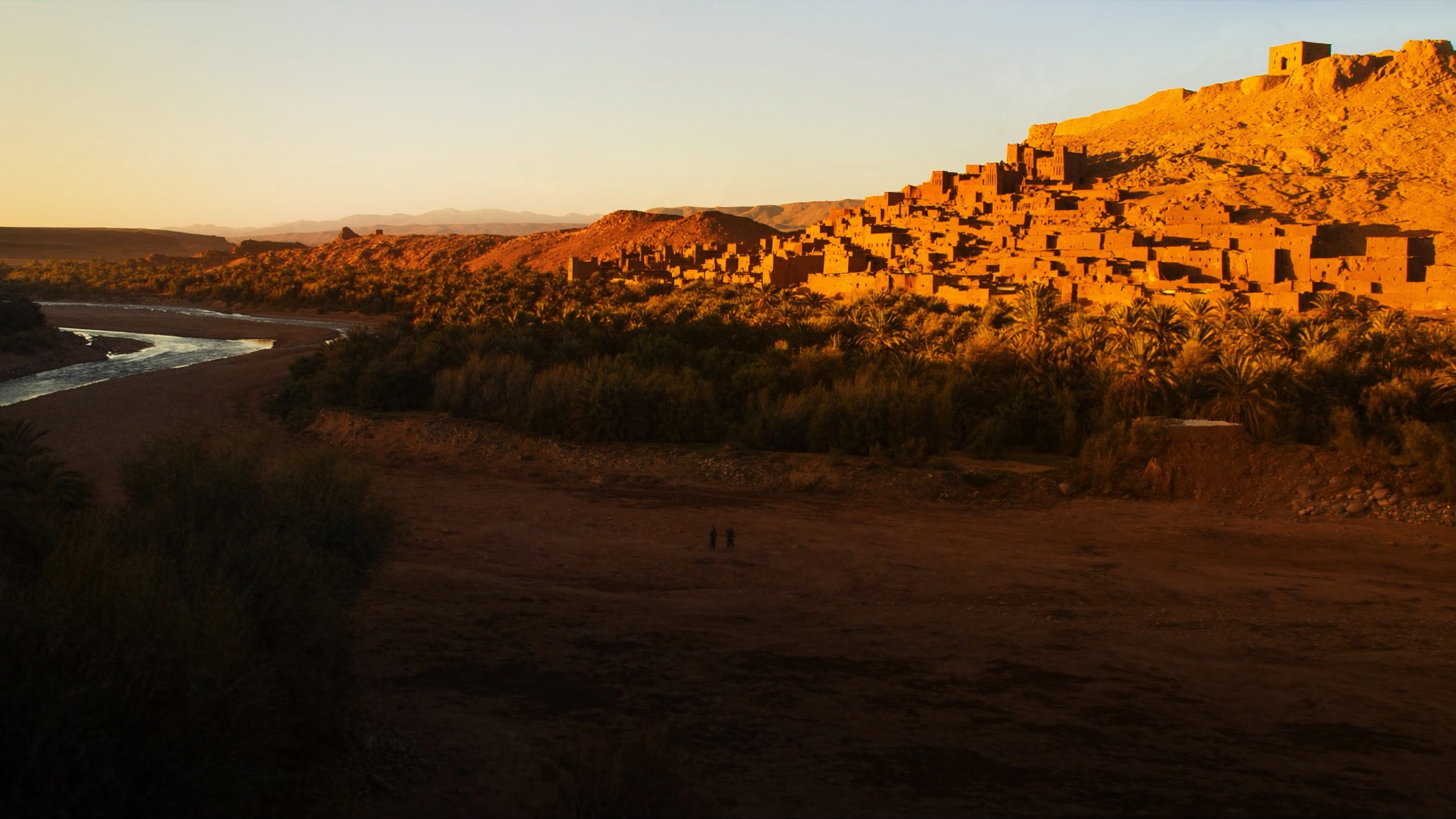
The area around Merzouga, Erg Chebbi, and the road south from Erfoud into the dunes is a genuine dead zone. Some spots near the main Merzouga town have faint signal from Maroc Telecom, but it's unreliable. If you're doing a desert overnight, download everything you need the night before in Rissani or Erfoud, which both have workable 4G. Tell someone your plans. Share your itinerary with someone at home or drop a pin before you go dark. This is basic travel sense, not alarmism.
The medinas of Fes, Marrakech, and Meknes are UNESCO-listed for a reason, but they are also genuinely disorienting. Fes el-Bali in particular has over 9,000 alleyways. Some are less than a meter wide. GPS signal bounces between the walls and produces errors. Download your offline map before you enter and use a compass-based navigation app rather than one that requires active routing. Locals are generally helpful with directions, but you'll get more out of asking if you have a rough sense of which neighborhood you're trying to reach.
ONCF, the Moroccan national railway, connects Casablanca, Rabat, Fes, Meknes, Tangier, and Marrakech. The Casablanca-Marrakech route takes about three hours on the faster services. Casablanca to Tangier runs through Rabat and Kenitra. Buy tickets through the ONCF app or at the station. Signal inside the trains is generally fine between the main cities, though it drops in tunnels through the Atlas foothills. This is a practical and comfortable way to move between the imperial cities without dealing with intercity buses or negotiating grand taxi prices.
Written by Texas Bukkens
Founder of eSIMMY. Spent years watching roaming charges eat into travel budgets - and built the fix. About Texas →
Drop a WhatsApp. Tell us where you're going. We confirm coverage and send your install link.
Say 'Hey' on WhatsAppFROM €2.85/DAY · 93 COUNTRIES